The Complete UK Solar Installation Guide for 2026
From first quote to first generation in 6 weeks. Costs, regulations, what to ask installers, and the mistakes that cost homeowners £2,400.
Installing solar in the UK in 2026 is faster, cheaper, and better regulated than at any point in the technology's history. It is also the single largest home-improvement decision most households make. This guide walks through the entire journey — from first quote to first kWh.
Average install cost: £7,200 for 6 kWp. Average timeline: 6.4 weeks. Average mistake: not getting three quotes.
Step 1: Sizing your system
The right system size matches your annual consumption pattern, not your peak demand. A typical UK household uses 2,700-4,200 kWh/yr. A 4 kWp system generates ~3,800 kWh/yr; 6 kWp generates ~5,700 kWh. Going much above your annual use rarely pays back, because the surplus is exported at lower rates than you save by self-consuming.
Critical variables: south-facing pitched roof (best), shading (any shade kills production), available area (need ~7 m² per kWp), structural condition of the roof. If your roof is over 20 years old, factor in re-roofing before install — disturbing panels later costs £800-£1,200.
Step 2: Finding installers
MCS (Microgeneration Certification Scheme) accreditation is non-negotiable. It's required for SEG payments, for warranty validity, and for the 0% VAT rate. The MCS website lists every accredited installer with their certification scope and historic complaints.
Get three quotes from three different installers. Compare like-for-like: same panel model, same inverter, same warranty terms. Watch for tactics — 'today-only pricing', high-pressure tactics, refusal to provide a written quote, or anything routed through 'finance specialists' rather than the installer. These are reliable indicators to walk away.
| System size | Panels only | + 5 kWh battery | + 10 kWh battery |
|---|---|---|---|
| 3 kWp | £4,200 | £7,400 | £9,800 |
| 4 kWp | £5,800 | £9,200 | £11,600 |
| 6 kWp | £7,200 | £10,800 | £13,400 |
| 8 kWp | £9,400 | £13,400 | £16,200 |
| 10 kWp | £11,800 | £16,200 | £19,400 |
Step 3: DNO and grid connection
Your Distribution Network Operator (DNO) — UK Power Networks, Western Power, SSE, Northern Powergrid, Electricity North West, or SP Energy Networks — must be notified of any solar install. For systems up to 3.68 kW single-phase, this is automatic G98 notification handled by your installer (no charge).
Systems above 3.68 kW or three-phase installations require G99 approval, which takes 4-10 weeks. Battery storage adds an extra G99 layer (Engineering Recommendation P28). Your installer handles all paperwork; expect £80-£250 fee on top of the install cost.
Step 4: Install day and commissioning
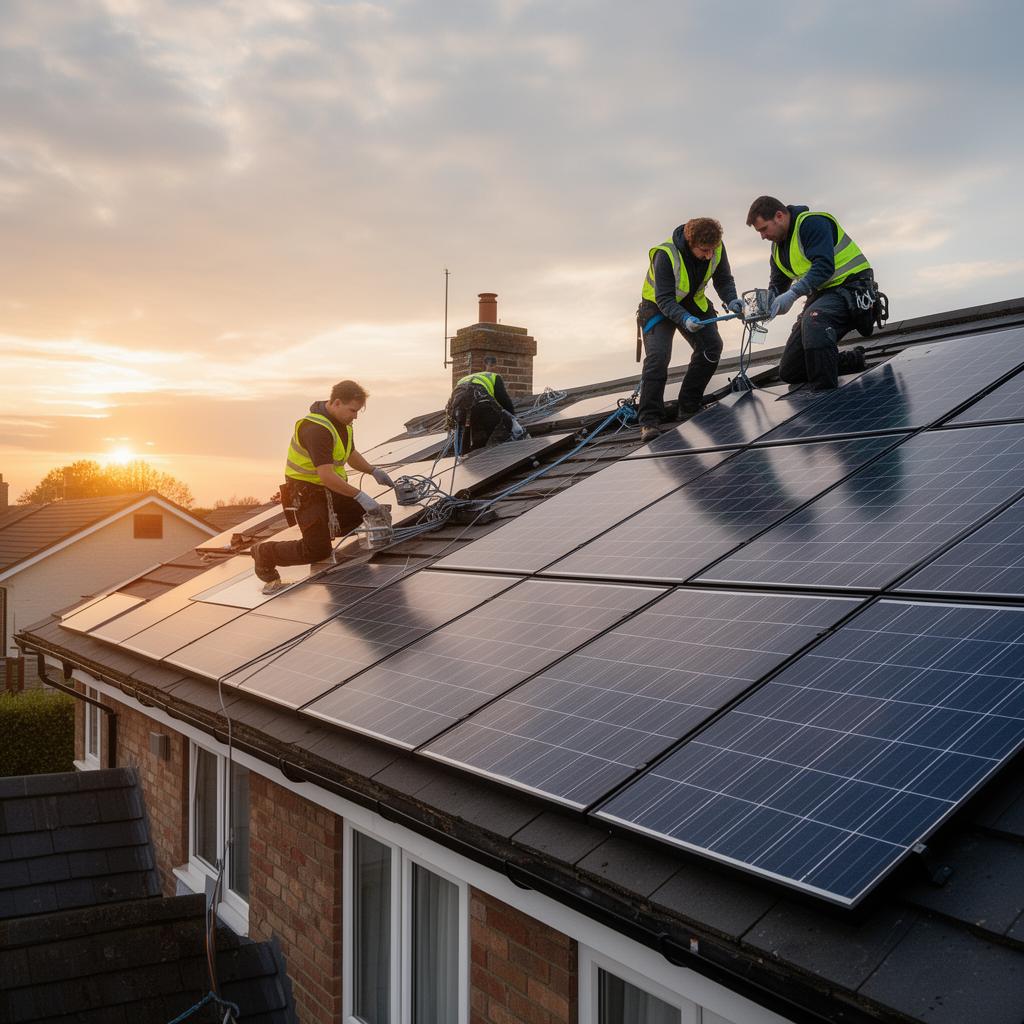
A typical 6 kWp install takes 1.5-2 days. Day one: scaffolding goes up, roof anchors fitted, panels mounted, DC cabling run inside the loft. Day two: inverter and isolators mounted in the loft or utility room, AC cabling to the consumer unit, commissioning tests, smart meter pairing.
Sign-off documents you must receive: MCS certificate (within 10 days), electrical installation certificate (NICEIC or NAPIT), DNO connection confirmation, panel and inverter warranties, system commissioning report. Without the MCS certificate, you cannot claim SEG payments.
Step 5: Smart Export Guarantee (SEG)
SEG is the legal scheme requiring large energy suppliers to pay for solar exports. Rates vary by supplier from 3p to 24p per kWh exported. The best tariffs (Octopus Outgoing Fixed, EDF Export+) currently pay 15-24p/kWh.
You must apply to the SEG provider of your choice — usually within 12 months of commissioning. You don't need to be a customer of that supplier for import; export-only contracts are common. Switch SEG provider yearly to chase the best rate.
Step 6: Maintenance and warranties
Solar panels need almost no maintenance. Best practice: annual visual inspection (£0-£90), inverter health check at year 5 and year 10, panel clean if visibly soiled (rarely necessary in the UK; rain handles it). Trees may grow into shading lines over time; trim them.
Inverters typically fail at year 12-15 — budget £1,200-£1,800 for replacement. Panels routinely outlast their 25-year warranties. Original 1985-vintage panels are still producing 80%+ of nameplate output in the field.
Step 7: Adding battery and EV charging later
Many homeowners install solar first, then add a battery and EV charging when the budget allows. This is fine — but tell your installer at the design stage. They'll specify a hybrid-ready inverter (£200-£400 more) which makes future battery retrofit a one-day job instead of a £900 inverter replacement.
Same for EV chargers: specify a 100 A consumer unit and run the cable conduit during the install. Adds £180 to day-one cost, saves £600 when you eventually fit the charger.
Frequently asked questions
Q.Do I need planning permission for solar panels?
A.No, in almost all cases. Permitted Development covers panels under 200 mm above the roof. Listed buildings and conservation areas require approval.
Q.What's the average payback period?
A.7-9 years for a typical install with SEG and self-consumption. Add a battery and it falls to 8-10 years; add EV charging and it falls to 5-7.
Q.Can I install solar myself?
A.Legally yes, but you forfeit MCS certification, SEG eligibility, manufacturer warranties, and 0% VAT. Almost never worth it.
Q.Does the 0% VAT rate still apply?
A.Yes, confirmed until at least March 2027 in the Spring 2025 Budget.
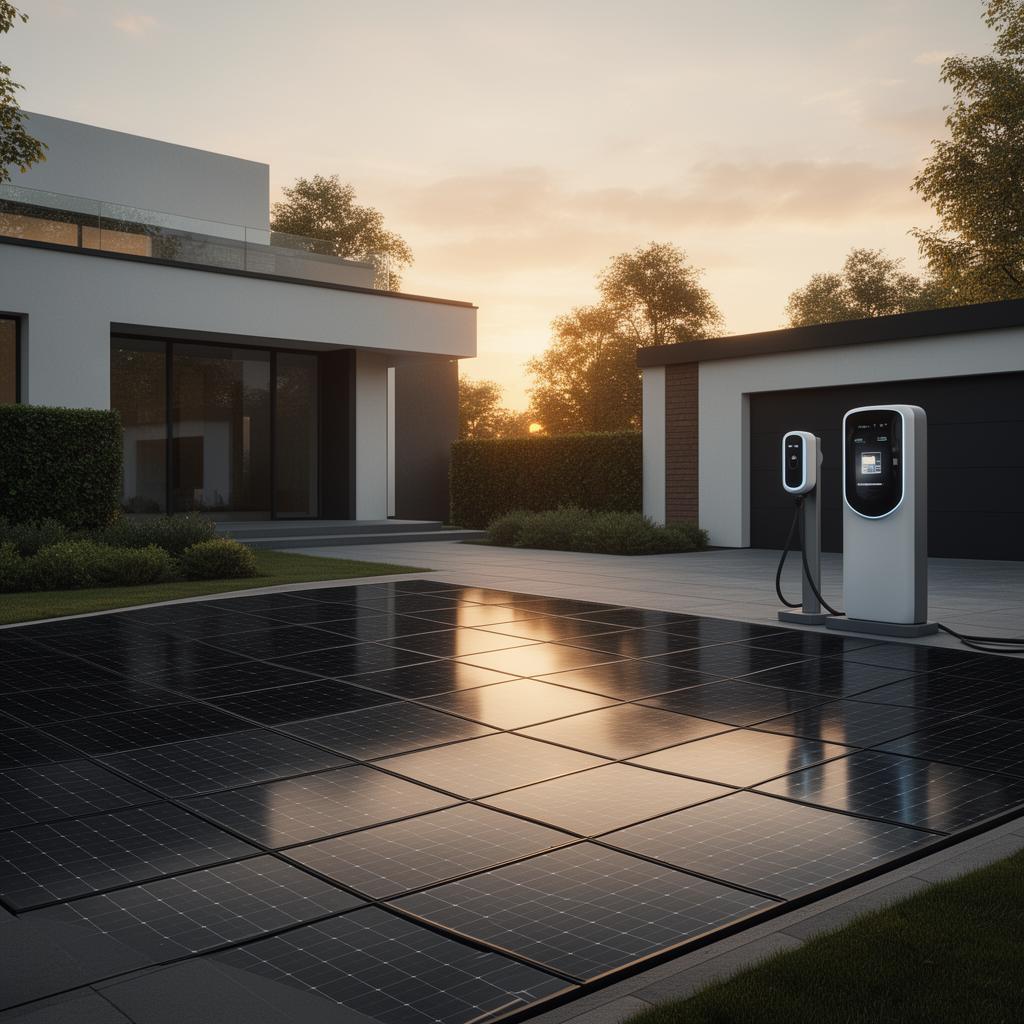
Ready to put this on your driveway?
Get a personalised quote in 90 seconds. No call required, no sales pressure.