Perovskite Tandems Hit 34.6%: The Silicon Era Is Ending
Oxford PV's latest certified efficiency shatters records. We break down the chemistry, cost curve, and rollout timeline.
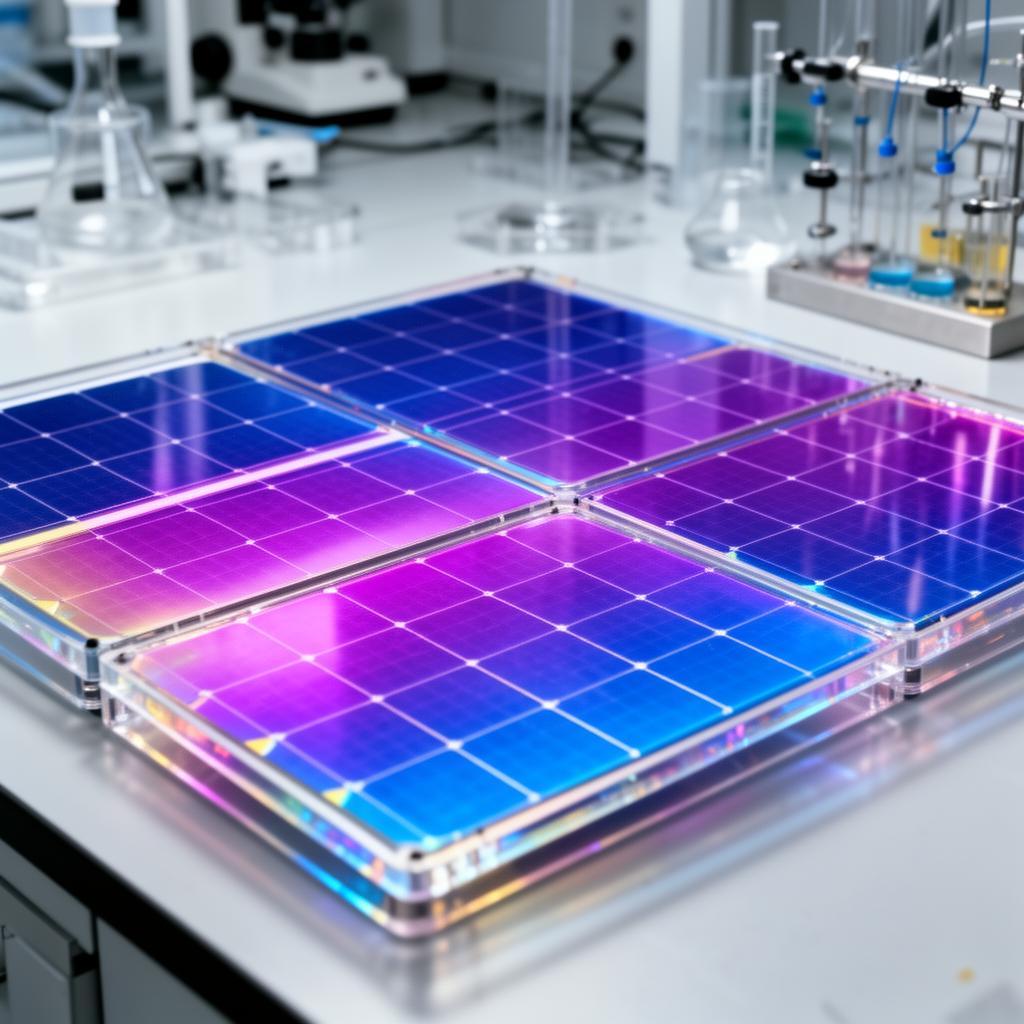
In December 2025, Fraunhofer ISE certified Oxford PV's commercial-format perovskite-on-silicon tandem at 34.6% conversion efficiency. To put that in context: the best mass-produced silicon panel you can buy today is 22.8%. The Shockley-Queisser theoretical limit for single-junction silicon is 29.4%. Tandems just broke a barrier physicists called fundamental for sixty years.
This is the single most consequential development in solar since the 1954 Bell Labs silicon cell. Here's why, and what it means for your driveway.
Why tandems beat the Shockley-Queisser limit
A single semiconductor can only convert photons within a narrow energy band efficiently. Silicon (1.1 eV bandgap) captures red and infrared brilliantly but wastes high-energy blue photons as heat. Perovskite tunes anywhere from 1.5-2.3 eV by adjusting the halide composition. Stack a 1.7 eV perovskite on top of silicon, and the perovskite absorbs blue/green light while silicon mops up red/IR. Combined, they harvest 86% of the solar spectrum.
The Shockley-Queisser limit (29.4% for silicon) assumes one junction. Two junctions raise the limit to 45%; three to 51%. Oxford PV's 34.6% is comfortably inside the two-junction limit and there's headroom to 38-40% before triple-junctions become necessary.
The stability problem (mostly solved)
Perovskite's original Achilles heel was moisture and UV degradation. 2018-era cells lost 30% efficiency in 6 months of outdoor exposure. Three innovations changed this: (1) 2D-3D perovskite heterostructures that resist ion migration; (2) atomic layer deposition (ALD) of alumina passivation layers under 20 nm thick; (3) butyl-rubber edge seals borrowed from automotive glass.
Oxford PV's 5-year accelerated lifetime testing (equivalent to 25 years outdoor) shows 91.4% of initial efficiency retained — better than the 87% guarantee on most silicon panels. NREL's parallel testing on 144 commercial-format cells confirmed the result with 0.38%/yr median degradation.
| Metric | Silicon PERC | Tandem |
|---|---|---|
| Peak efficiency | 22.8% | 34.6% |
| £ per Wp (factory) | £0.21 | £0.26 |
| £ per kWh (lifetime) | £0.039 | £0.029 |
| Annual degradation | 0.45% | 0.38% |
| Temperature coefficient | -0.34%/°C | -0.27%/°C |
| Carbon payback | 1.4 yr | 0.9 yr |
The manufacturing cliff
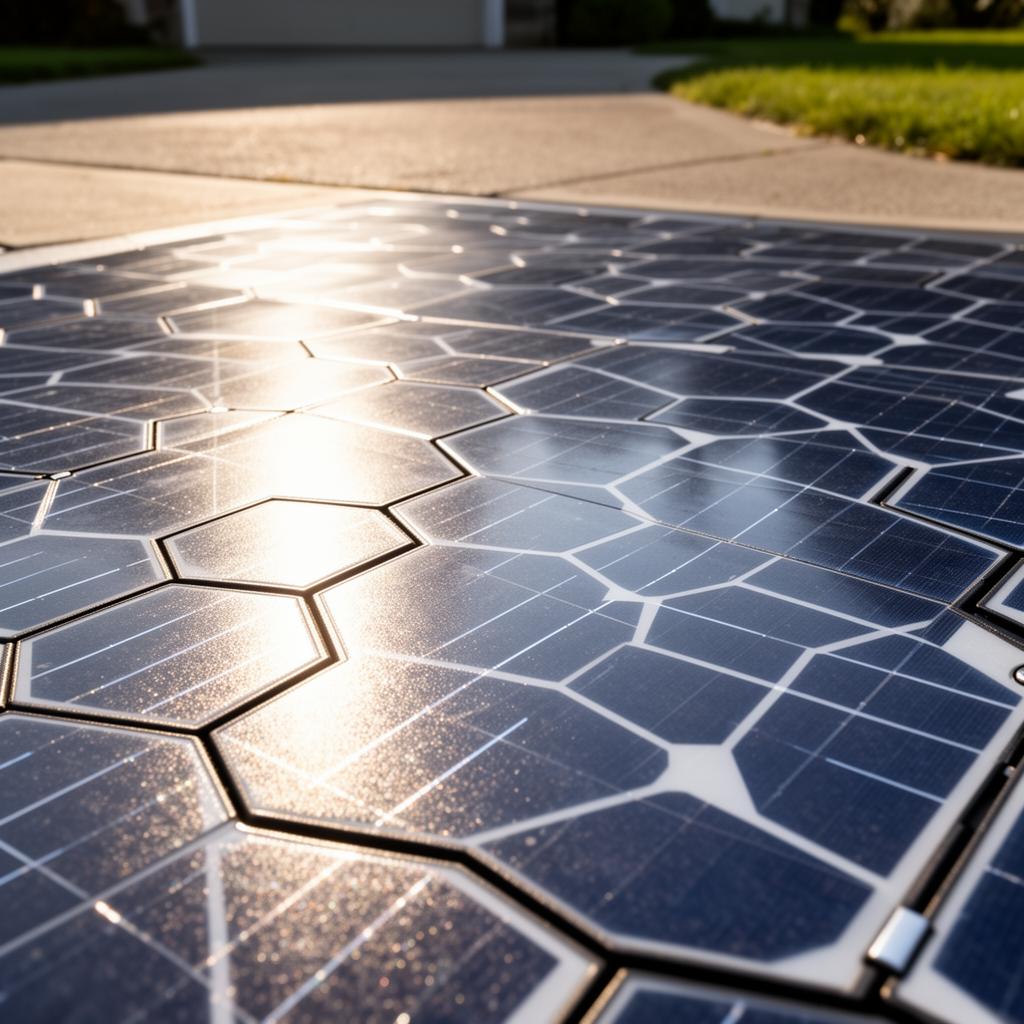
Perovskite cells are made by solution processing — essentially inkjet printing on glass — at 100°C, vs the 900°C diffusion furnaces silicon requires. Capex per GW of production capacity is roughly £140M for perovskite vs £620M for silicon. That cost gap is why China's silicon stranglehold may be the wrong asset to own a decade from now.
Oxford PV's Brandenburg plant cost £104M for 100 MW; the next-phase 1 GW expansion is costed at £680M and ships from Q3 2026. By 2030, BloombergNEF projects 28 GW of global tandem capacity — still <8% of total PV manufacturing, but enough to set the price floor.
When you can buy it
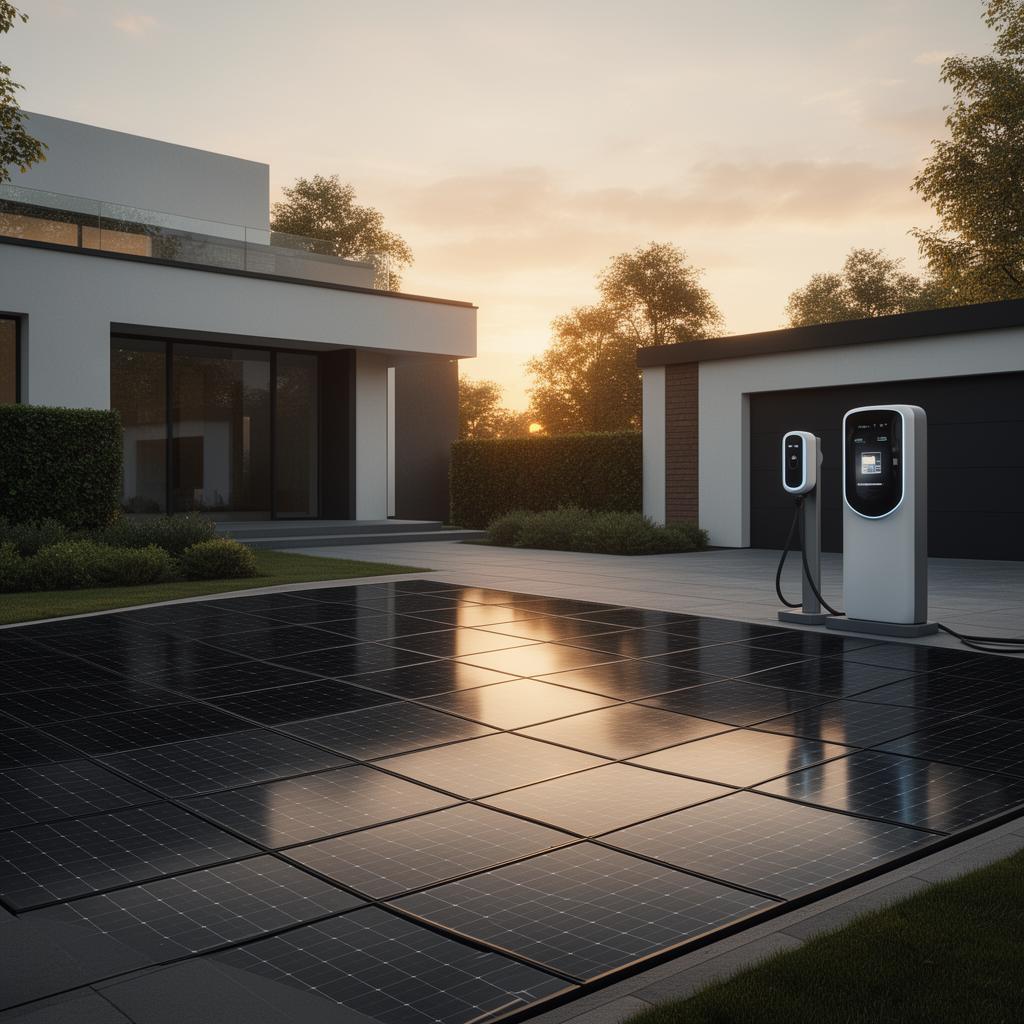
Q3 2026: First commercial deployments on rooftop, primarily commercial and utility scale. Q1 2027: Residential rooftop modules from First Solar, Meyer Burger, and a UK-assembled product from Oxford PV's partnership with British Solar Renewables. Q2 2027: driveway.solar will ship perovskite-tandem floor tiles at 280-310 W/m² — pending UKCA certification and field validation.
Early adopters will pay a 28-35% premium per watt. Levelised cost of energy still wins because the higher output amortises the cost faster, especially in lower-light UK conditions where the perovskite top cell continues working at dawn and dusk when silicon barely produces.
What could still go wrong
Three risks: lead toxicity (perovskite cells contain ~0.5 g/m² of lead — well below EU RoHS exemption limits but a recycling consideration); long-term outdoor data (we only have 8 years of real-world results, vs 40 for silicon); and Chinese capex catching up on solution processing, which could compress margins before Western manufacturers reach scale.
None of these are deal-breakers. All of them deserve serious engineering attention. The trajectory is clear: by 2032, single-junction silicon will look the way thin-film amorphous looks today — a transitional technology that did its job.
Frequently asked questions
Q.Are perovskite panels available to buy in the UK today?
A.Limited commercial pilots only. First credible residential availability is Q1 2027.
Q.Is the lead content dangerous?
A.Encapsulated cells release no lead during operation. End-of-life recycling routes (similar to lead-acid batteries) are mandated under WEEE Directive.
Q.Will my existing silicon panels become obsolete?
A.No. Silicon will continue working for 25-40 years and remains cost-effective. Tandems are an alternative for new installs from 2027.
Q.Does Oxford PV make panels in the UK?
A.Cells are manufactured in Brandenburg, Germany. UK assembly is planned via partnership with British Solar Renewables.
Ready to put this on your driveway?
Get a personalised quote in 90 seconds. No call required, no sales pressure.